Te whakahaere ara e rere ai te wai-ua i te whenua
Managing overland flow paths
Overland flow paths are routes that carry stormwater across land during heavy rain. Keeping them clear helps to reduce the risk of floods.
About overland flow paths
Overland flow paths are routes where water naturally flows across the ground. They carry extra stormwater during heavy rain and when the pipe network is full, blocked or does not exist. When this happens, these paths become temporary, fast-flowing streams.
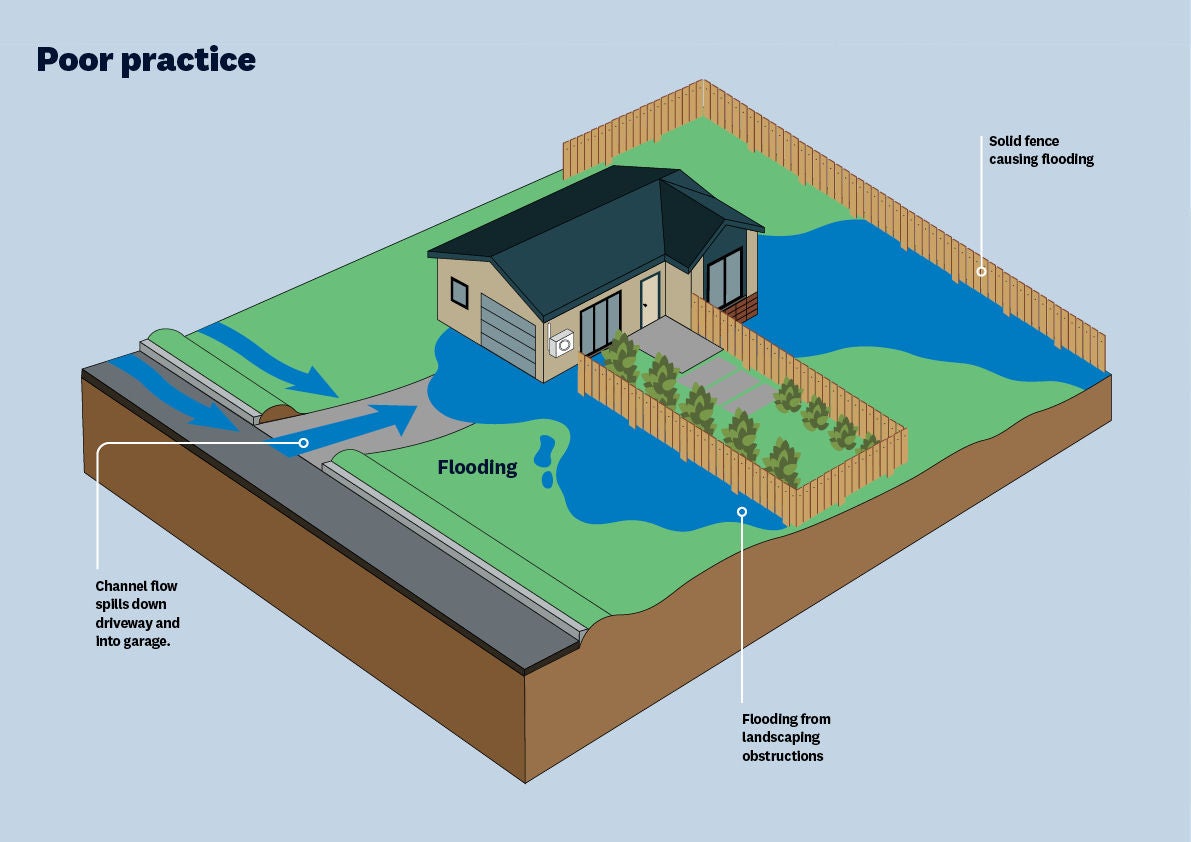
Water can build up and enter homes if an overland flow path is blocked by items like fences, buildings, trees or stored items. Keeping these routes clear reduces flood risks and helps keep people and property safe.
Overland flow paths can cross both public and private land. Use our Flood Viewer to find out if an overland flow path crosses your property.
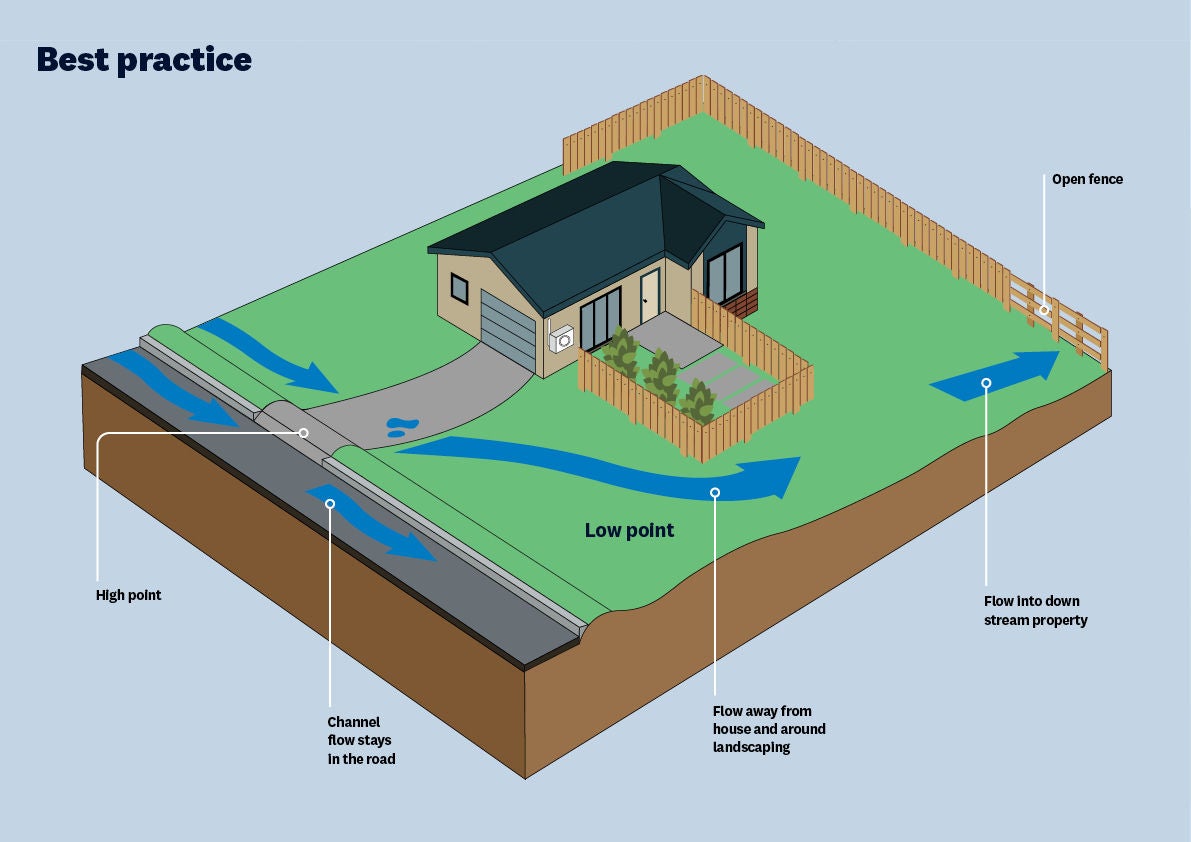
Example of well-managed overland flood path
There are ways we can manage our land to help water flow away more effectively.
Example of a poorly managed overland flood path
How we use land affects where water flows.
Overland flow path assessment (OLFP)
Our teams assess overland flow paths across Tāmaki Makaurau / Auckland to:
understand how rainwater moves across properties during heavy rain
help us plan and prioritise bigger improvements across the region
identify stormwater issues and help reduce flood risk for your home and the wider community.
If your property is in a overland flow path area, you may receive a letter explaining why your property needs an assessment and what to expect next.
What happens during OLFP assessment
We will visit your property to check:
how stormwater flows during heavy rainfall
if improvements are needed.
This visit should take 15-30 minutes. If you need to take any action, we will contact you by letter or email with the next steps.
How to manage your overland flow paths
To keep flow paths clear and reduce flood risks, you can:
remove debris Scattered pieces of rubbish or leaves., rubbish, garden waste or items that could be carried by water and cause blockages downstream
avoid placing outdoor furniture, bins, sheds or storage in a flow path
keep gutters, downpipes Pipes that run from the gutters to the ground that carry rainwater into the stormwater or combined system, private ground soakage device or rain tank. and catchpits The grate that sits over the top of a drain to catch any matter (leaves, rubbish, etc.) that might otherwise block the drain. clear and in good working order.
If you own your home:
make sure fences and landscaping let water pass through, for example by using raised or slatted designs
use permeable surfaces Natural ground surfaces, including grass and soil, which allow water to pass through and soak into the ground, reducing the volume of run-off flowing over the ground. for driveways and outdoor areas where possible
tell your landlord or property manager about any blockages or drainage issues.
If we find serious issues
If your overland flow path continues to cause serious issues, we may take action to make sure they are safely managed and kept clear. We will explain what needs to change and how to fix the issue.
Downloadable guides
Read our guides and learn about:
maintaining gutters, downpipes Pipes that run from the gutters to the ground that carry rainwater into the stormwater or combined system, private ground soakage device or rain tank. and catchpits The grate that sits over the top of a drain to catch any matter (leaves, rubbish, etc.) that might otherwise block the drain.
ground soakage The natural process where water is absorbed into the soil.