What is green infrastructure?
Green infrastructure can have many forms, such as:
- a widened and replanted stream bank that helps to manage floodwater
- a permeable paved path that reduces the amount of stormwater entering the piped system
- a row of street trees or a whole urban forest
- a green roof or vertical wall
- a rain garden or an urban farm.
Broadly, the term refers to any system that fuses natural and built environments to reduce the environmental impact of core infrastructure The structures, systems and facilities that support daily life such as water supply, roads and communications, including social infrastructure. and the built environment.
Further information on green infrastructure is available at:
United States Environmental Protection Agency website
ESRI Living Atlas of the World website
Examples of green infrastructure
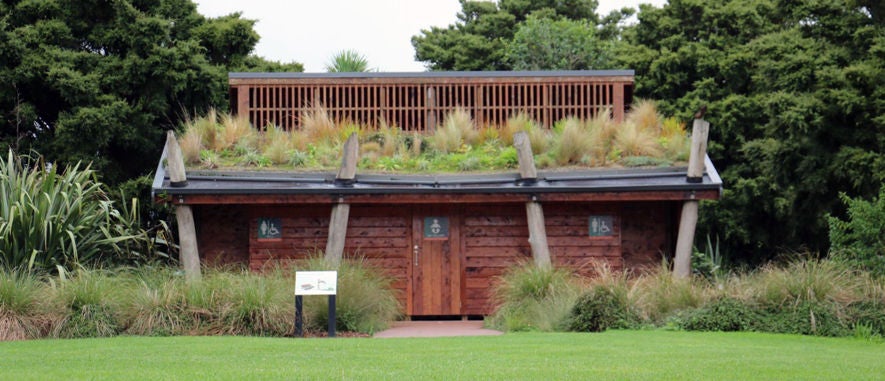
Green roof and swale at the Auckland Botanic Gardens
The Auckland Botanic Gardens has planted native plants on the roof of its public toilet facilities, that absorb and treat rainwater.
This 'living roof' is combined with a vegetated swale A low tract of land, especially one that is moist or marshy. Artificial swales are often designed to manage water run-off, filter pollutants, and increase rainwater infiltration. – an area designed to manage water run-off Water flows which result from rain water which is not absorbed by permeable surfaces or that which falls on impermeable surfaces. – which further slows down and filters the flow of water, delivering relatively clean water to lakes in the gardens.
The swale works by increasing the time available for large sediment Tiny fragments of organic or inorganic matter suspended in water. Sediment is a pollutant caused by erosion and earth works. particles and contaminants to settle and be absorbed by the soils and plants.