He aha mātou e kohikohi nei i ngā rukenga kai
Why we are collecting food scraps
We are aiming for zero waste by 2040. Keeping your food scraps out of the rubbish is a great way you can help.
Why we want to collect food scraps from households
Food is a valuable resource, however when food goes to landfill it produces methane and CO2 which are harmful greenhouse gases.
One tonne of methane released into the atmosphere creates the same amount of global warming as 25 tonnes of CO2.
When food is trapped in landfill the nutrients it contains are also trapped, but those nutrients could be returned to the land in biofertiliser to grow more food.
The collection of rukenga kai Food scraps is one of several approaches we are taking to keep food scraps out of the rubbish. Other initiatives include:
preventing food waste in the first place
supporting redistribution of food through food rescue initiatives
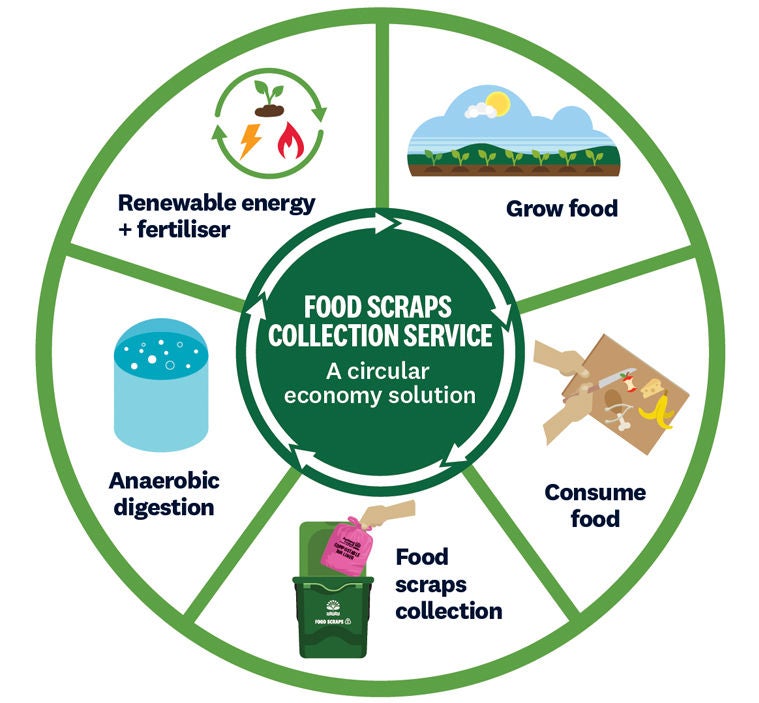
We will collect food scraps separately in Auckland’s roadside collection service. The scraps will then be converted into renewable energy and biofertiliser through an anaerobic digestion facility in Reporoa.
How you will benefit from the food scraps collection service
The climate and environmental benefits of recycling food scraps are huge, but there is also a personal benefit in being more aware of your food waste.
Separating your food scraps helps raise awareness of how much food is being wasted, which can lead to better meal planning and save you money.
If you compost or have a worm farm, ka pai te mahi! You can still use your new food scraps bin for items that are not usually composted such as meat, small bones, onion skins, shellfish, and dairy.
Place your food scraps bin roadside for collection the night before your council collection day.
Some of the food scraps collection trucks are electric. As electric vehicle technology becomes more reliable and financially viable, we will increase the number of electric vehicles for collecting food scraps.
Once your food scraps are picked up, they are dropped off at consolidation sites around Auckland. The food scraps are consolidated (or mixed together) and moved into larger trucks for the journey to the processing facility.
The food scraps processing plant is centrally located in the North Island and can process food scraps from other cities and commercial companies. Once fully operational, the plant will process 75,000 tonnes of organic material each year, including food scraps from Auckland and other councils.
The plant uses anaerobic digestion technology – a biological process that breaks down organic material without oxygen.
Food scraps are broken down in closed tanks into:
biogas (which will be captured and converted into renewable energy)
nutrient liquid fertiliser (which will be used on farmland).
This is the first time this technology has been used to process food scraps on a large scale in New Zealand.
If any contaminants (such as glass, metal or plastic) are found in the process, the plant has machinery that removes them so that they do not end up in the liquid fertiliser.
How you can access the liquid fertiliser made from your food scraps
Garden lovers consider this fertiliser ‘liquid gold’ because it is rich in nutrients and minerals from food scraps.
Where to get your fertiliser
You can collect fertiliser from the Beautification Trust car park at 38 Holmes Road, Manurewa. The self-service station is to your right at the top of the driveway.
When you can pick up your fertiliser
You can access it from 9am to 4pm, Monday to Saturday.
How much you can take
You may take up to four litres per person so that there is enough for everyone.
Safety information
Bring your own container and use gloves when filling it.
Attach a product information sticker so the fertiliser is not confused with anything else.
How we monitor the food scraps facility
All facilities that accept food scraps will operate within their consent conditions.
The largest facilities at Papakura and Reporoa are fitted with a purpose engineered odour filtration system to ensure that odour from the buildings does not discharge into the atmosphere above resource consent limits.