Product recall – how to safely dispose of coloured play sand products
Suppliers issued a recall of children’s coloured play sand products as tests found low levels of asbestos. For details of products affected go to MBIE.
If you are a private household affected by the product recall, you should:
stop using the product immediately.
keep the sand sealed in its container, place it in a thick plastic bag and secure it with tape.
place the bag or container into a second thick plastic bag, seal it securely with tape, and label it clearly as 'Asbestos-Contaminated Material'
take your safely contained product to the Auckland Council Asbestos Lab in Grafton.
do not put the product in your household rubbish
do not take asbestos to a transfer station.
Auckland Council Asbestos Lab
Address: Kari Street, Grafton (old City Parks Nursery / Depot at end of Kari Street – drive to the far end of the street and through the gates).
Opening hours: You can drop off recalled product between 9am and 3.30pm, Monday to Friday.
Follow signs to the special bins for placing your safely contained product. Do not unwrap the product. Place the wrapped product directly into the bin.
Visit Health NZ for more advice about removing asbestos from your home.
Asbestos on Tāmaki Estuary beaches
Pieces of asbestos containing material (ACM) have been found on the Tāmaki Estuary coastline between Karaka Bay and Panmure Wharf. The largest amounts of ACM have been found at Glendowie Bay.
The ACM found is considered a low risk to health. However, you should not touch, collect or pick up any material that looks like pieces of fibre cement board.
You cannot take asbestos to transfer stations. Visit WorkSafe to find asbestos removal licence holders who can dispose of asbestos for you.
About asbestos and ACMs
Asbestos
Asbestos is a naturally occurring mineral made up of small, strong fibres. It was widely used in building materials in New Zealand between the 1940s and mid-1980s.
The building industry mostly stopped using asbestos in New Zealand by the late 1980s. A total ban was applied on its use in 2016.
ACM
An ACM is a material that contains more than 1 per cent of asbestos. Examples of ACMs include:
insulation boards
cement sheeting
vinyl flooring
roof tiles.
Identifying asbestos
If you think you have materials that contain asbestos, you should have them tested by a professional.
Visit IANZ and search 'asbestos' for a list of accredited asbestos testing services. This will help you decide how to handle the materials.
We do not provide an asbestos testing service for the public.
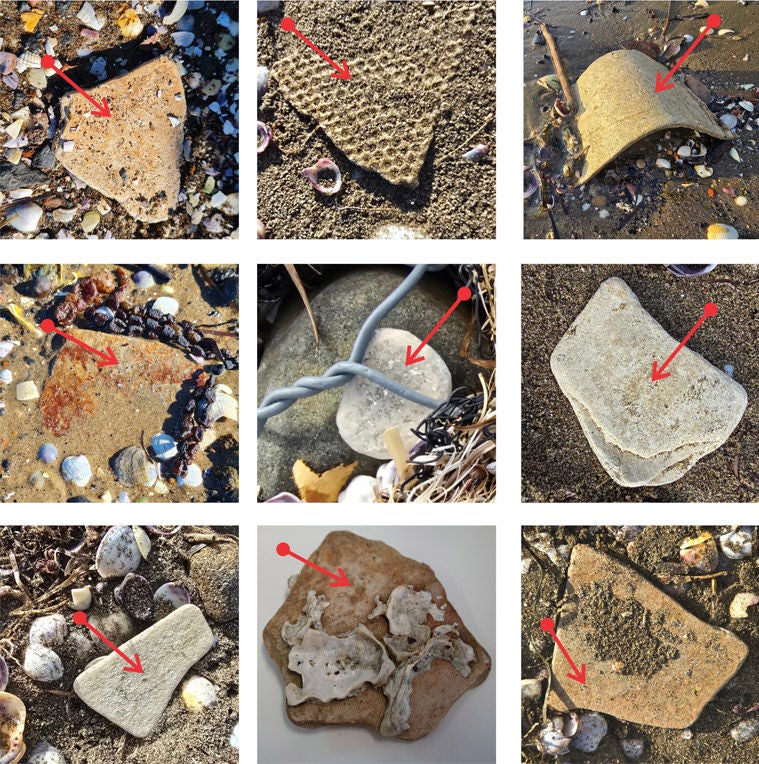
Examples of ACM found on Auckland’s eastern coastline
Disposing of asbestos
Use a professional asbestos removal company to dispose of asbestos. Visit Worksafe for a list of certified asbestos removers.
Transfer stations in Auckland do not accept asbestos.
Our staff and contractors will not collect items they think contain asbestos. This includes items you put out for inorganic collections.
'Friable' asbestos can be crumbled into powder by hand. This can release toxic asbestos fibres into the air. If inhaled, these fibres can cause serious health risks like mesothelioma A type of cancer that mostly affects the lining of the lungs. and lung cancer.
'Non-friable' asbestos is less of a health risk. It is secured in a solid material like cement and cannot crumble by hand. This material only becomes hazardous if it crumbles.
Health risks from asbestos are at their lowest when it is wet.
Asbestos on Tāmaki Estuary beaches
ACM found on the beaches and in mudflats Muddy areas found along the coast that are covered with water at high tide and exposed at low tide. between Karaka Bay and Panmure Wharf are non-friable. This material is a low health risk when left untouched.
Health risks come from inhaling asbestos fibres. These are unlikely to be released from materials found on these beaches unless they dry and crumble.
Health risks from ACM on these beaches are further reduced because:
they are wet
fibres are washed away by sea water
the pieces are small and do not break easily.
Most ACM found on our beaches is in the form of old building materials like fibre cement board.
If you pick up a piece of ACM and take it home, there is a higher risk that fibres will be released. This happens when the material dries out and if the cement crumbles.
Do not pick up any material that could be ACM.
Visiting Tāmaki Estuary beaches
It is still safe to visit beaches on the Tāmaki Estuary.
The material found on these beaches is a form of bonded asbestos (asbestos-cement) which is a low-level health risk.
What we are doing about asbestos on our beaches
We are:
monitoring affected areas
further monitoring ACM released from mudflats after tidal or weather events
removing visible ACMs through beach clean-ups
installing warning signs at entrances to affected beaches and mudflats
updating beach users and residents on social media, local news and the council website
using experts to carry out a detailed site investigation (DSI). We will publish the DSI report at a public forum.
ACM clean-up dates
Our Environmental Health team began removing visible ACM in February 2025 at: