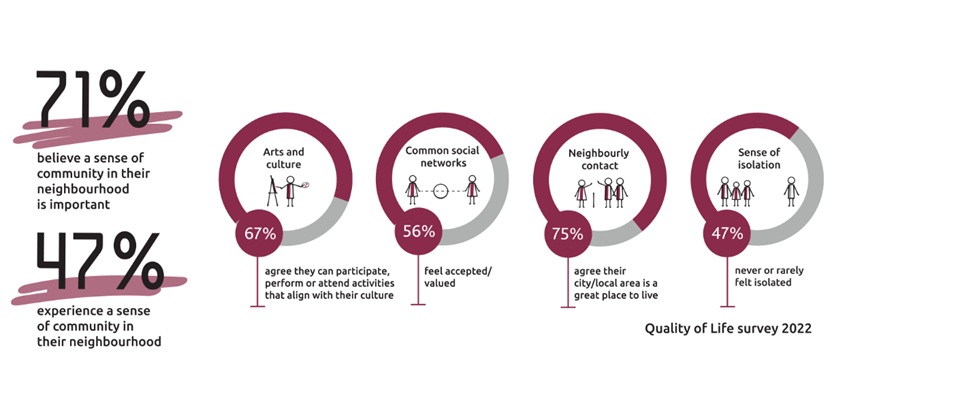
The sense of belonging is different for everyone.
Belonging can be tied to feelings of wellbeing, identity, and attachment to place.
It can be influenced by:
- how safe and secure people feel, including freedom from racism and discrimination
- the sense of connectedness within the community
- trust in other people
- whether others can be relied on for help if needed
- whether share equal access to opportunities to participate in society
- whether people feel able to express themselves and play an active role in decisions that impact them.
Trust in public institutions is critical in maintaining social cohesion and impacts on community resilience.
Belonging can also be influenced by how well, and how easily, people can see themselves reflected in civic and community life, in positions of leadership, decision-making and in public spaces.
High levels of trust between people lead to cooperation and contribute to positive relationships with others.
Auckland's significant population growth is an opportunity to increase a sense of belonging among existing Aucklanders and to foster it amongst newcomers.
It is not always easy for people to adjust to and welcome change. Sharing time and activities with other people builds trust, social connection, a sense of belonging, and attachment.
The more Aucklanders trust each other, the more connected, productive, and thriving they are likely to be.
The process of fostering inclusion, however, requires time and commitment. Building an inclusive Auckland is a collaborative endeavour, as it is not within the control of any one person, group or organisation.
Achieving a sense of belonging and supporting the ability to participate requires activity under all the outcomes in the Auckland Plan 2050.
We can all help create a sense of belonging through our own actions.
Related information
More information about this outcome