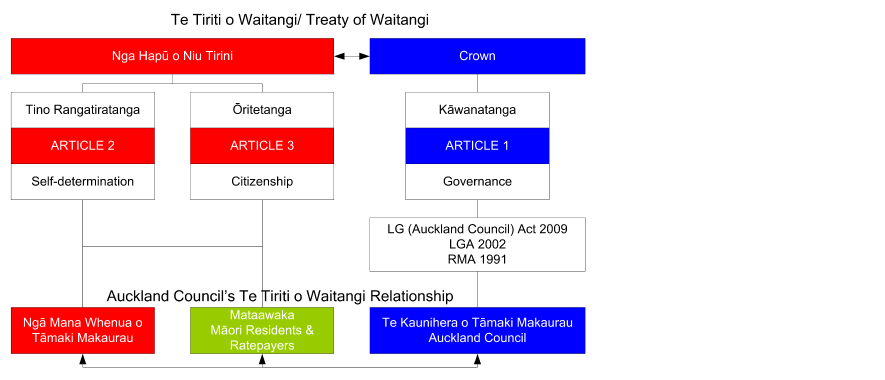
Auckland Council is a delegate of the Crown exercising powers of local government in Auckland. It has statutory obligations to Māori in order to recognise and respect the Crown's responsibility to take appropriate account of the principles of the Treaty.
The Treaty is articulated in law through an evolving set of principles.
Treaty principles have been expressed and recognised through a range of courts and the Waitangi Tribunal. They are not exhaustive, and it is recognised that other principles may be developed with time.
They must be considered holistically rather than separately due to the overlaps and synergies between them.
The following principles are relevant to local government:
- partnership
- active protection
- rangatiratanga There are two components: 1. chieftainship, right to exercise authority, chiefly autonomy, chiefly authority, ownership, leadership of a social group, domain of the rangatira, noble birth, attributes of a chief. 2. kingdom, realm, sovereignty, principality, self-determination, self-management - connotations extending the original meaning of the word resulting from Bible and Treaty of Waitangi translations.
- reciprocity
- mutual benefit
- options
- right of development
- redress
- informed decision making.
Te Tiriti / the Treaty is a guide for how Auckland Council fosters more positive and productive relationships with Auckland's Māori.