
Natural environment
Te manahau o te kanorautanga hauropi taketake, o ngā nōhanga me ngā pūnaha hauropi Resilience of Auckland's indigenous biodiversity, habitats and ecosystems
Action area N1: Build the resilience of Auckland’s indigenous biodiversity, habitats and ecosystems to the impacts of climate change
Indigenous flora and fauna are under threat from a changing environment, particularly where those changes are so fast or significant that species cannot adapt or are overrun by exotic invasive species Non-indigenous species whose introduction or spread threatens biodiversity, food security and/or human health and wellbeing. that can adapt quickly.
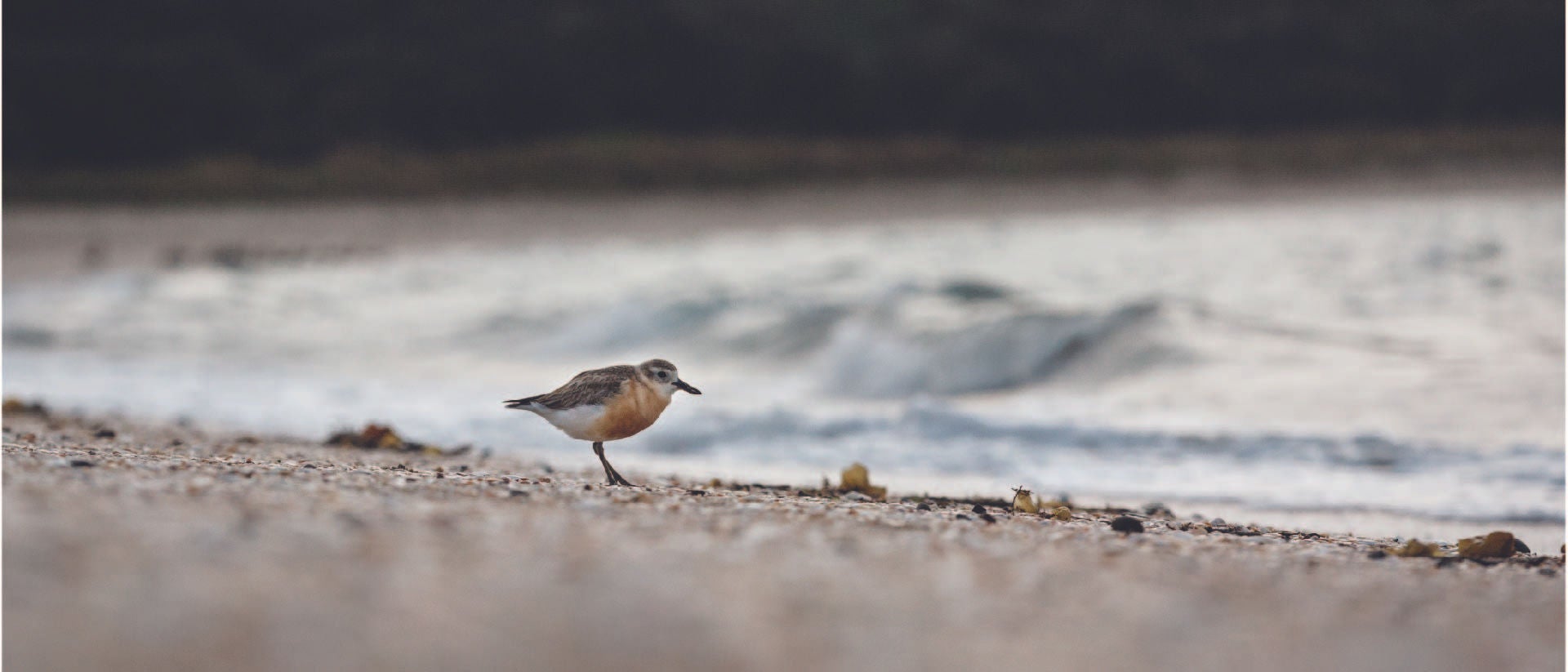
NZ Dotterel, Shakespear Regional Park
To reduce the vulnerability of our indigenous biodiversity Biodiversity is short for biological diversity. It describes the variability among living organisms, and the ecological complexes of which they are a part, including diversity within species, between species, and of ecosystems. Indigenous biodiversity includes individual birds, plants, fish, insects and other species that are specific and/or native to New Zealand. There are many examples, such as kiwi, tui, inanga (whitebait), weta, and ti kouka (cabbage tree). we need to:
- increase our understanding of potential climate change risks to Auckland’s indigenous ecosystems A biological system comprising a community of living organisms and its associated non-living environment, interacting as an ecological unit that occur naturally in New Zealand, including self-introduced species, but not human-introduced ones. and species and ensure that these are integrated into planning and policy considerations
- increase our commitment to control key pests and weeds that are expected to benefit from climate change, across a full range of Auckland’s indigenous ecosystems
- expand habitat protection Management of threats to existing ecological areas, including but not limited to, legal protection., restoration and enhancement programmes to increase the viability, geographical extent and connectivity of indigenous terrestrial, freshwater and marine ecosystems Living organisms and non-living structures in the ocean environment, and their complex relationships to each other.
- expand habitat restoration within the Kaipara Harbour, Hauraki Gulf and Manukau Harbour
- develop approaches that support resilience and recovery of indigenous biodiversity from climate change effects (e.g. drought, storms) and increase public understanding of the importance of pre-emptive action
- increase opportunities for community-led monitoring programmes and connection to our natural environment
- promote, progress and fund current and emerging initiatives, programmes and groups actively committed to the restoration, sustainability and protection of interaction between tāngata People. and whenua Land, country, earth or ground. systems within their communities.